Table of Contents
The short answer
For most homes in Abu Dhabi the answer is the same for all four: have sofas, carpets, mattresses and curtains professionally cleaned every six to twelve months, and vacuum them in between. Six months suits a home with children, pets, frequent guests or someone who is bothered by dust. Twelve months suits one or two adults who are out most of the day. The rooms that work hardest, such as a family living room or a majlis in daily use, can need it sooner than six months. A guest room that is slept in for a few weeks a year can wait longer than twelve.
That range is the one we already publish for carpets and sofas in our deep cleaning guide, and for mattresses and curtains on their service pages. It is advice, not a rule. Nothing breaks on the day a sofa passes its twelfth month. The interval is simply the point at which dust, body oils and fine sand have built up further than a vacuum can reach. The longer they stay, the harder they are to remove and the more they wear the fibres.
IHR Dream Cleaning cleans all four at your home, priced by the item and not by the hour: AED 30 per sofa seat, AED 10 per square metre of carpet, mattresses from AED 79 and curtains at AED 30 per standard panel. The four services are set out on our fabric care page. The rest of this guide explains how to place your own home inside the six-to-twelve-month range.
| Item | Starting point | Go sooner when |
|---|---|---|
| Fabric sofa | Every 6–12 months | Children, pets, guests most weeks, meals eaten on it |
| Carpets and rugs | Every 6–12 months | Shoes worn indoors, a walkway or dining table on it, a desert-edge home |
| Mattress | Every 6–12 months | No protector, a child's bed, a pet on the bed, a humid room |
| Curtains | Once or twice a year | Beside a balcony door or open kitchen, bukhoor or smoke in the room |
Why fabric runs on its own clock
A tiled floor shows its dirt. Dust lands on the surface, stays on the surface and leaves with the mop. Fabric hides it. On a sofa, a carpet, a mattress or a curtain the same dust falls between the fibres and works downwards every time someone sits, walks or lies on it. By the time a fabric looks dirty it has been holding dirt for months.
Three kinds of soil go in. Dry soil is dust, sand, lint, hair, skin flakes and crumbs. Oily soil is what skin and hair leave behind, plus hand cream, cooking vapour and smoke. Spills are the third. A vacuum used every week takes out most of the dry soil. It does nothing to the oily soil, and the oily soil is the problem, because it works as glue. Dust sticks to it and stays. That is the grey film on sofa arms and headrests and the dull track across a carpet where people walk.
This is also why an ordinary cleaning visit does not reset the clock. A regular visit vacuums the carpets and tidies the sofa. A deep clean goes further: it vacuums the upholstery, the rugs and the mattresses and dusts the curtains. Neither washes them. Washing is separate work with separate machines and products, booked as its own service. A home can be cleaned every week and still have a sofa that has not been washed in three years.
What Abu Dhabi adds
Fine sand is the first thing. It comes in on shoes, through balcony door tracks and around window seals, and at the scale of a fibre it is hard and sharp. In a carpet it settles to the base of the pile. In a sofa it collects in the seams and under the cushions. Our earlier article on what to know before booking sofa and carpet cleaning explains what that does to fibres over time.
The second is the closed home. For most of the year the windows are shut and the AC recirculates the same air. Dust that is in the room stays in the room, and so do cooking smells and bukhoor. Soft furnishings are the largest surface in most rooms, so that is where both end up.
The third is humidity. Homes near the water are humid for much of the summer, and a home left closed for weeks with the AC off is worse. Fabric and mattress filling that stay slightly damp develop a stale smell that vacuuming cannot shift.
What waiting too long costs
Soil that sits becomes harder to remove. Oily film darkens as it collects dust. Spills that dried clear, such as a sugary drink, can turn brown weeks later. A mark that a clean would have lifted at six months may only lighten at two years.
Some of the cost is permanent. Grit at the base of a carpet cuts and flattens the pile, and a walkway that has been ground down stays dull after cleaning because the fibre itself is damaged. The same goes for sofa arms rubbed thin and shiny. Cleaning removes dirt. It cannot put fibre back.
Why more often is not automatically better
A wet clean puts water, detergent and some brushing onto the fabric. At a sensible interval that does no harm and a good deal of good. Repeated every few weeks on a piece that is barely used, it is expense and wear with nothing to show for it. Vacuuming is the exception. It can hardly be overdone, as long as the attachment suits the fabric. The rule that follows is simple: vacuum often, and wash at the interval the use calls for.
What moves your interval up or down
Six to twelve months is a wide range on purpose. Where your home sits inside it depends on a handful of things, and each has a plain reason behind it.
- People and hours. A sofa used by two adults for an evening takes a fraction of the body oil and dust of one used by a family all day. Count hours of use, not the age of the piece.
- Children. Food, drinks, sticky hands and play on the carpet all mean more spills, and spills are what turn into set stains when they wait a year.
- Pets. Hair and the oil from a coat work into upholstery and pile, and an occasional accident needs treating promptly. The detail is in pets at home: hair, odour and accidents.
- Shoes indoors. Most of the grit in a carpet arrives on soles. A shoes-off household can sit at the long end of the range for carpets. A shoes-on household cannot.
- Eating and sleeping on the sofa. A sofa that doubles as a dining chair or a bed collects what a dining chair and a bed collect.
- Where the home is. Villas on the desert edge and ground-floor homes take in more sand through their doors. Sea-facing homes are more humid, so fabric stays damp longer after a spill and smells sooner.
- Smoke, bukhoor and cooking. Curtains and upholstery absorb all three. An open kitchen beside the living room shortens the curtain and sofa interval more than people expect.
- Colour and weave. Light, plain fabrics show soil early and are usually cleaned for appearance before anything else. Dark and patterned fabrics hide it, which is a reason to go by the calendar and not by eye.
- Someone bothered by dust. Fabric is where a room stores its dust, so the shorter interval is the sensible one. Cleaning is not a treatment for any condition, and symptoms are a matter for a doctor.
How to use that list
Count how many of those apply to the room, not to the home. A living room with children, a dog and an open kitchen is a six-month room even if the guest bedroom next door is a twelve-month one. Fabric care is priced by the item, so nothing stops you having the family sofa cleaned twice a year and the formal one once.
Item by item
The range is the same for all four, but each item collects a different kind of soil, shows it in a different place and is shortened by different things.
Sofas and upholstered chairs
Start at every six to twelve months for a fabric sofa in ordinary use. A household with children, pets or guests most weeks is better at six. A family sofa that is sat on all day, eaten on and slept on may want it every three or four months. Two adults who are out all day can go the full twelve.
The places to watch are the arms, the headrest line and the front edge of the seat cushions, where skin and hair touch the fabric. They darken first. Lift a seat cushion and compare the colour underneath with the colour on top. The difference is what a clean will take off.
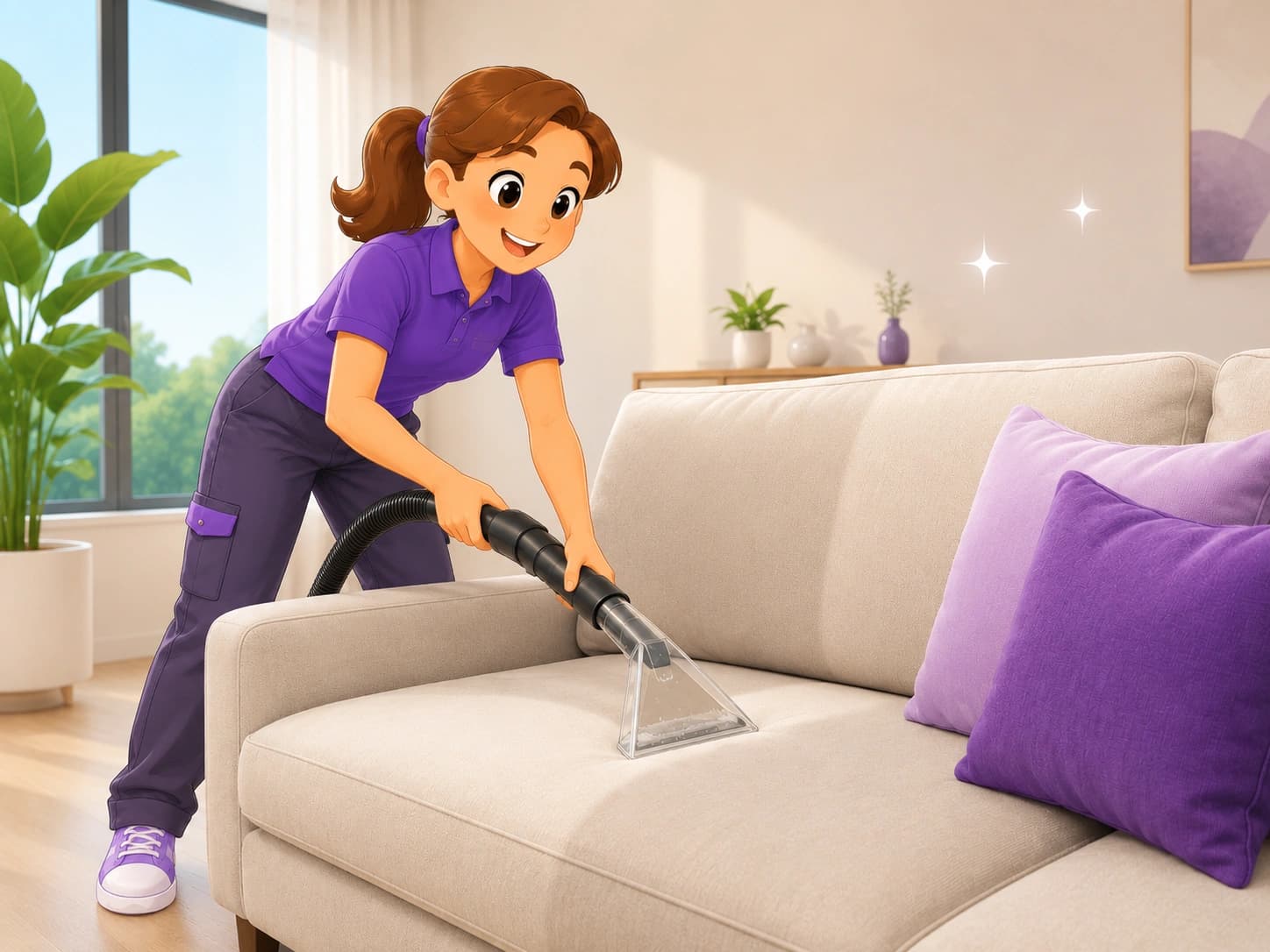
Leather is different. It has no weave to hold dust, so it is cleaned and conditioned and never shampooed, and its interval is set by dullness and by grime on the arms more than by a calendar. What you can do yourself between visits, and where to stop, is in cleaning a sofa at home. What a professional visit includes is on the sofa cleaning page.
Carpets and rugs
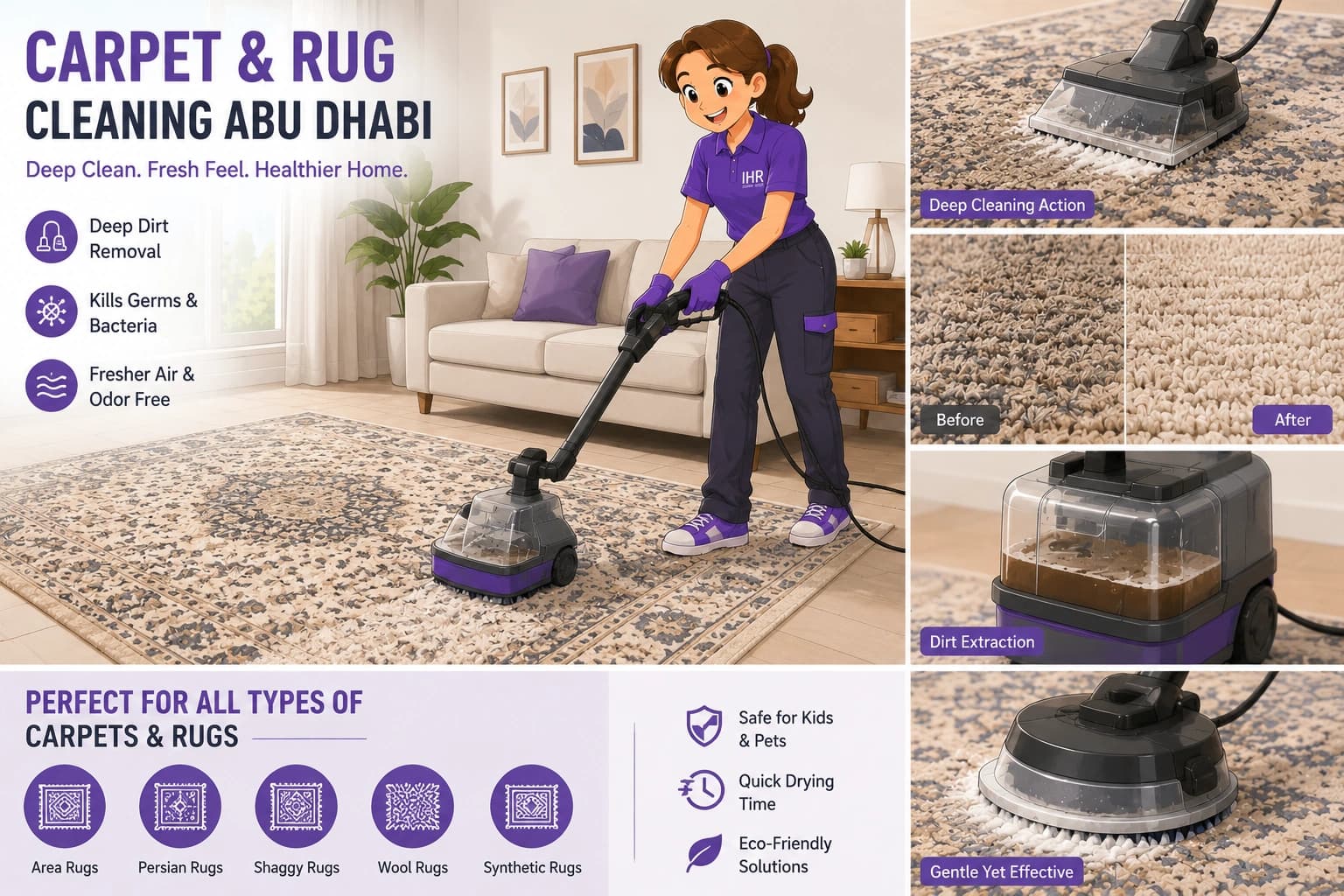
Fitted carpet and large rugs: every six to twelve months. Traffic sets the pace more than anything else. The strip between the door and the sofa, the area under a dining table and the rug in a children's room reach six months looking the way a bedroom carpet looks after a year.
Sand makes carpets a special case here, for the reason given above: grit left in the pile wears it, and no wash reverses wear. In a home that takes in a lot of sand, vacuum weekly and do not stretch the interval. The routine is in keeping a carpet clean between professional washes.
Handmade, wool and silk rugs do not belong on this timetable without a conversation first. They need a gentler method, and whether a rug can be cleaned at home at all depends on its fibre and its dyes. Read what to ask before a Persian or handmade rug is washed and describe the rug when you book. Sizes, prices and the method for ordinary carpets are on the carpet cleaning page.
Mattresses
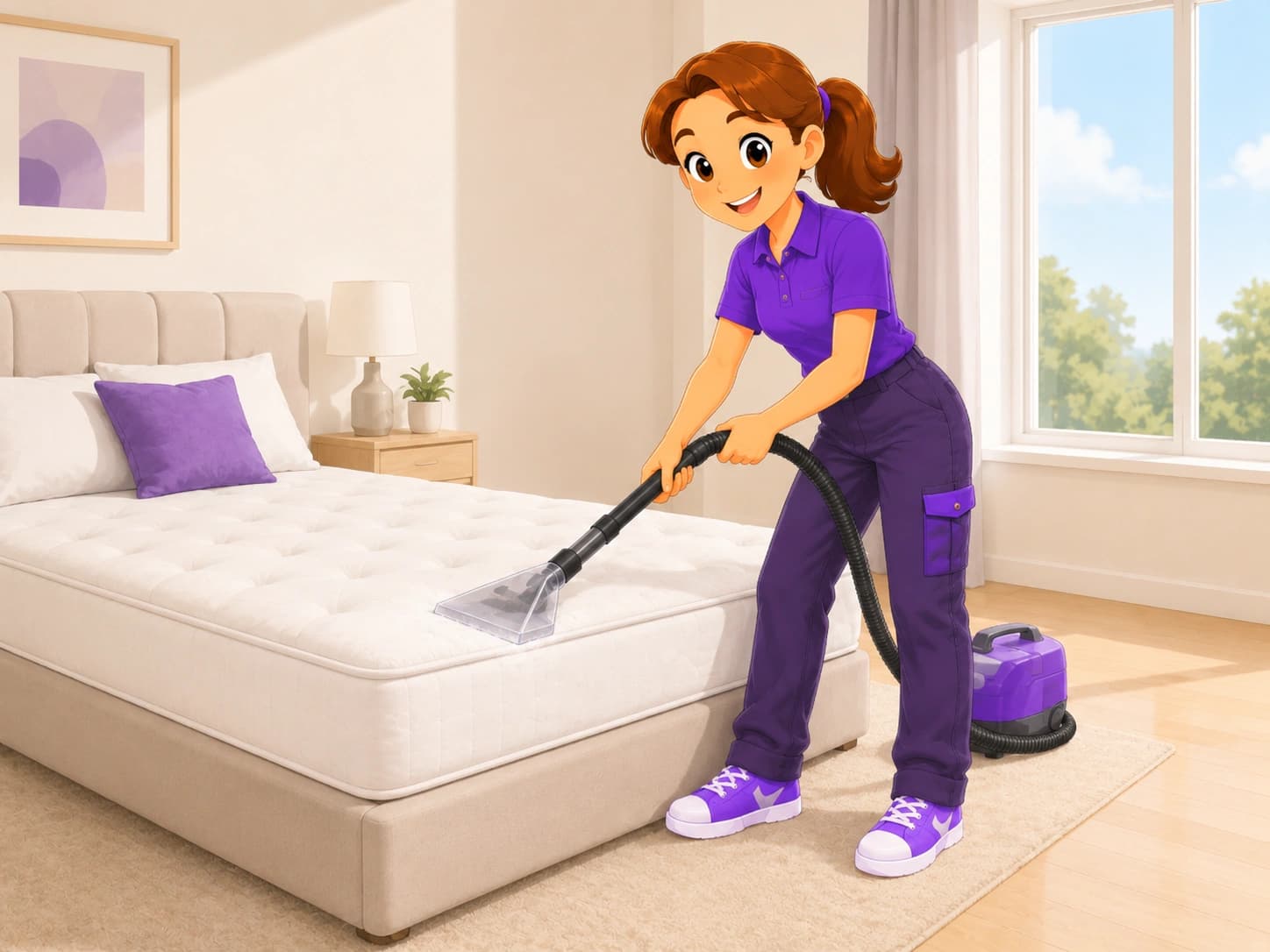
Every six to twelve months, and six is the common choice. A mattress takes more body moisture, oil and skin than any other piece of furniture, because someone lies on it for a third of every day, and none of it shows under the sheet.
A washable protector changes the picture. It catches most of the sweat and the spills and goes in the washing machine, so a protected mattress in an adult's room sits comfortably at the twelve-month end. An unprotected one, a child's bed, or a bed that a pet shares belongs at six. Rooms on the humid side of the coast, and rooms where the AC is switched off for long periods, also do better at the shorter interval, because a mattress that stays slightly damp starts to smell.
The home routine, and what to do about sweat marks, is in mattress cleaning at home. If the worry is bites and not dust, cleaning is the wrong service: see dust mites or bed bugs, and how to tell them apart. Sizes and what the visit covers are on the mattress cleaning page.
Curtains
Once or twice a year suits most homes, which is the same six to twelve months. Curtains act as the room's dust filter. They hang beside the windows and the balcony door, exactly where outside dust comes in, and the AC moves the room's air through them all day.
Go to twice a year for curtains next to a balcony door that is opened daily, on the dusty side of a villa, near an open kitchen, or in a majlis where bukhoor is burned. Sheers show grey sooner than lined curtains because they are pale and hang closest to the glass. Heavy lined and blackout curtains hide dust well, so they are the ones that get left for years. Run a hand down a fold near the top and look at your palm.
Our published method is steam cleaning on the rail, and the choice between that and taking curtains down to be washed is explained in on-site steam or take-down washing. Panel sizes and prices are on the curtain cleaning page.
Signs an item is due, whatever the calendar says
The calendar is a prompt. The fabric is the evidence. Any two of these mean the piece is due now.
- Pat a seat cushion or the back of the sofa in a beam of sunlight. A visible puff of dust means the filling is holding more than the vacuum takes out.
- The arms, the headrest line and the seat fronts are darker or shinier than the back of the sofa or the underside of a cushion.
- The walkways on a carpet look grey and flat next to the pile under the furniture.
- There is a smell when you sit down, when the AC first comes on, or when the room has been closed for a day.
- The fabric feels slightly tacky or stiff where it used to feel dry and soft.
- A grey line runs along the top folds of the curtains, or a dull band along the hem where it brushes the floor.
- Marks on the mattress show through a fitted sheet, or the bed smells stale when it is stripped.
- Vacuuming no longer changes how the piece looks.
What cleaning will not change
Some things that look like dirt are not. Sun fading is permanent: a curtain or a sofa arm bleached by a west-facing window will look fresher and more even after cleaning, not darker. Pale spots left by bleach or a strong cleaner are lost colour. Flattened, shiny walkways in an old carpet are wear. Pilling and sagging cushions are wear too.
It helps to know this before booking, so the money goes on what cleaning can do. Send photos and say what worries you most. Our technicians point out, before starting and not after, any mark that may only lighten.
When in the year to book
The interval tells you how often. The calendar tells you when. Five points in the Abu Dhabi year are worth planning around.
Before Ramadan, Eid and family occasions
Sofas and majlis seating are in use every evening and the curtains and carpets are on show, so this is a common time to book. Book for the week before, not the day before. Everything needs hours to dry, the room should be aired afterwards, and a stain that needs a second treatment needs a day in hand. The wider preparation is in our pre-Ramadan and Eid cleaning checklist, and floor seating and bukhoor residue are covered in the guide to cleaning a majlis.
After a summer away
A home closed for weeks comes back with settled dust on every fabric and, often, a stale smell in the sofa and the mattresses. Air the home and run the AC for a day or two first, because some of that smell is only trapped humidity and leaves by itself. What remains after that is in the fabric, and a clean in the first weeks back is well timed. The order to tackle the whole home in is set out in reopening a home after summer travel.
After a run of dusty days
Wait until the air has cleared. Damp fabric collects dust quickly, so a carpet washed while sand is still blowing under the balcony door dries dirty. Vacuum thoroughly first, because a good deal of what a sandstorm leaves is loose and comes out dry. Curtains and the carpet nearest the balcony take the most. For villas on the desert edge, what to do first after a sandstorm gives the full order of work.
The cooler months
Fabric dries well all year here with the AC running. From late autumn there is the extra option of opening windows for a cross-draught, and families are at home and hosting more. If you clean once a year, early in the cool season is a sensible slot: the closed-house smell of summer and the dust of autumn are dealt with in one visit.
Around a move
Moving into a furnished home, have the mattresses and the sofa cleaned before the first night if you can. They hold most of what the previous occupant left, and an empty room dries faster. Moving out, read what your tenancy contract says about carpets and curtains before the handover, and allow drying time before the inspection.
Fabric items booked together with a deep clean or a move-in or move-out clean are 10% off, which makes a move or a seasonal deep clean the economical moment to have them done.
Between cleans: the routine that makes the interval work
None of this replaces a wash. It decides which end of the range you land at, and it keeps grit from doing damage that no wash can undo.
| Job | How often | What it prevents |
|---|---|---|
| Vacuum sofas, including under the seat cushions | Weekly | Dust bonding to body oil on the fabric |
| Vacuum carpets slowly, in two directions | Weekly; walkways twice | Grit reaching the base of the pile |
| Vacuum the mattress | Monthly, when the linen is off | Dust and skin flakes building in the quilting |
| Vacuum curtain folds and headers with a soft brush | Every few weeks | A grey line setting along the pleats |
| Swap and turn seat cushions; rotate rugs | Monthly | Uneven wear and fading |
| Rotate the mattress | Every few months | A hollow forming on one side |
| Blot spills with a white cloth | At once | A spill becoming a set stain |
Two habits that do more than any product
Shoes off at the door, with a mat outside and another inside. Sand stopped at the entrance never reaches the carpet, the sofa or the hem of the curtains.
Washable layers on the surfaces that take the most contact: a protector on every mattress, a throw on the seat the family uses most, covers on dining chairs if small children eat there. What goes through the washing machine every week or two is soil that never reaches the fabric underneath.
And one thing to avoid. Do not work household products into a mark you intend to have treated. Many of them set a stain or strip the dye around it, and they limit what a professional can do afterwards. Blot, leave it, and say what was spilt when you book.
Putting all four on one calendar
The four items do not need four appointments. Sofas, carpets and mattresses are cleaned with the same equipment and dry over the same hours, so one visit can cover them, and curtains can be steamed on the same day. One day of damp rooms is easier to live with than four.
One visit also clears the minimum order more easily. Priced items have a minimum of AED 100 per visit. A three-seat sofa alone is AED 90; add a rug or a mattress and the visit is over the line. How seats, square metres and panels are counted, with worked examples, is in the fabric care price list explained, and every figure is on the price list.
A workable pattern for most homes is two fabric visits a year. The first, larger one covers everything. The second, six months later, covers only the pieces that are on the six-month clock.
| Household | Sofas and carpets | Mattresses | Curtains |
|---|---|---|---|
| One or two adults in an apartment, out all day | Once a year | Once a year, with a protector | Once a year |
| Family with children | Every six months | Every six months | Once a year; twice beside the balcony |
| Villa with pets or a majlis in daily use | Every six months; the main sofa sooner | Every six months | Twice a year |
| Guest room or second home | Once a year or before a long stay | Before a long stay | Once a year |
How to read the calendar
These rows are starting points worked out from how fabric collects soil in homes of each kind. They are not a published rule, and nothing depends on hitting the month exactly. Use the row nearest your household for the first year, then adjust by the signs listed earlier. If the sofa shows them at four months, shorten. If the bedroom carpet shows none at twelve, lengthen.
Common questions
Does frequent cleaning wear out a sofa or carpet?
Dirt wears fabric faster than cleaning does. Grit grinds the fibres with every step and every sit, which is continuous, while a wash is a few controlled passes once or twice a year. What does cause harm is the wrong method: too much water on a fabric that shrinks, hard scrubbing on velvet, a strong product on wool. That is a question of method, not of frequency, and it is covered in shampoo, steam or dry cleaning: which method suits which fabric.
When should a new sofa or carpet have its first clean?
Count from the day it went into use. In an ordinary household that puts the first clean at around the twelve-month mark, and at six in a busy one. Keep the care label and any care leaflet that came with the piece, and read what the seller's warranty says about cleaning before anyone wets it. Send a photo of the label when you book so the method can be matched to it.
Do rooms nobody uses still need it?
Less often, but not never. Dust settles in a formal majlis or a guest room whether or not anyone sits there, so the curtains and the carpet in those rooms run on exposure, not on use. Once a year is reasonable for both. A guest mattress under a protector and a cover barely changes from one year to the next, and can simply be cleaned before a long stay.
Does a deep clean of the home include the sofa and carpets?
It includes vacuuming them. On our deep cleaning checklist, sofas and upholstery are vacuumed and refreshed on the surface, carpets and rugs are vacuumed thoroughly, mattresses are vacuumed and curtains are dusted. Washing any of them is a separate fabric service priced by the item. Both can be done on the same visit, and booking them together is what earns the bundle discount on the fabric items.
How long are the rooms out of use afterwards?
Plan for the rest of the day. Most sofa fabrics need two to six hours of airflow before the cushions are used. Carpets take from several hours to a day, depending on the pile, the method and the ventilation. Mattresses are usually dry within a few hours in an air-conditioned room, which is why a morning visit is the safe choice if the bed is needed that night. Curtains dry on the rail within a few hours with the AC running. The technician gives you the expected time for your fabric before leaving.
Is the interval the same for office carpets and chairs?
Offices sit at the short end. Carpet in a reception or a corridor takes shoes all day and desk chairs are sat on for a full working day, so six months is a reasonable starting point and the busiest walkways may need attention sooner. Meeting rooms used a few times a week can wait longer. Office carpet cleaning can be scheduled outside working hours on request, so the floor is dry by the time staff are back.
Choosing your interval and booking it
Start with six to twelve months for everything. Move the hardest-used pieces to six, leave the quiet rooms at twelve, vacuum weekly, and let the signs in this guide correct you after the first cycle.
When an item is due, the fabric care page lists the four services and what each visit includes. Booking is online, on the website or in the IHR Dream app. You choose the items and send photos of the pieces and any marks, and we confirm the method and the final price before the visit. Payment is by card from My bookings on this website once that price is confirmed. We work every day, 8 AM – 8 PM, with no extra charge on Fridays or public holidays, and you can book fabric care online.
Services in this article
All fabric care guides
- Sofa and Carpet Cleaning: What to Know Before BookingFabric care · 6 min read
- Sofa, Carpet, Mattress and Curtain Cleaning Prices in Abu Dhabi: The Price List ExplainedFabric care · 17 min read
- Shampoo, Steam or Dry Cleaning? Which Method Suits Which Sofa and CarpetFabric care · 17 min read
- Cleaning a Sofa at Home: What You Can Safely Do Yourself and Where to StopFabric care · 17 min read
- Pets at Home: Hair, Odour and Urine Accidents on Sofas and CarpetsFabric care · 22 min read
- Cleaning a Carpet at Home Between Professional Washes: Vacuuming, Spills and SandFabric care · 17 min read
- Persian and Handmade Rugs: Why They Need a Different Wash and What to Ask FirstFabric care · 17 min read
- Mattress Cleaning at Home: Sweat Stains, Dust and How Often to Have It DoneFabric care · 20 min read
- Dust Mites or Bed Bugs? How to Tell the Difference and Who to CallFabric care · 16 min read
- On-Site Curtain Cleaning: Steam or Take-Down Washing for Sheer, Lined and Blackout CurtainsFabric care · 16 min read