Table of Contents
The short answer
The fabric chooses the method. Sturdy synthetic sofas and synthetic carpets are cleaned with shampoo and extraction: detergent is worked into the fibre, then rinsed and vacuumed out with the dirt. Fabrics that shrink, water-mark or lose their pile when wet, such as velvet, linen, viscose and silk blends, need a low-moisture method. Leather takes none of the three. It is cleaned and conditioned. 'Steam cleaning' of a carpet usually means hot-water extraction, which involves no steam at all, and true steam is mostly a tool for curtains and hard surfaces.
So the useful question to put to any company is not 'do you do steam?' but 'what will you use on this fabric, how wet will it get, and how do you test first?'. A method that is right for a polyester corner sofa can ruin a viscose velvet one in ten minutes.
At IHR Dream Cleaning the published methods are these. Sofas are shampooed, with a low-moisture shampoo or extraction where the fabric allows it. Carpets are cleaned with shampoo or hot-water extraction suited to the fibre. Mattresses are cleaned with very little moisture. Curtains are steamed on the rail. All four are described on our fabric care page. We have not published a dry-powder, encapsulation or solvent service, so where this guide describes those, it is describing the trade in general and not our menu.
What the three words mean, and a fourth you should know
Adverts use these words loosely, and the same word can describe two different machines. Here is each in one line, with the detail below.
| Method | How it works | Moisture | Typical use |
|---|---|---|---|
| Shampoo with extraction | Foam brushed in, then rinsed and vacuumed out | Medium | Fabric sofas, soiled carpet |
| Hot-water extraction ('steam') | Hot solution sprayed in and vacuumed out in one pass | Medium to high | Synthetic carpet, many wool carpets |
| True steam | Vapour with very little liquid | Low | Curtains on the rail, freshening |
| Dry compound or encapsulation | Absorbent powder or crystallising foam, vacuumed out | Very low | Office carpet, fibres that must stay dry |
| Solvent | A water-free cleaning fluid | No water | Upholstery coded S |
Shampoo
A detergent made for fabric is diluted, turned to foam and worked into the fibre with a brush or a hand tool. The foam loosens oily soil and holds it. In older practice the foam was left to dry and vacuumed off afterwards, which left a good deal of detergent behind. Done properly today, shampooing is followed by extraction: a rinse and a strong wet vacuum that pull out the detergent together with the dirt.
Its strength is agitation. Brushing foam into a greasy sofa arm or a grey walkway shifts soil that a rinse alone would pass over. Its risk is what is left behind. Detergent that stays in the fabric dries sticky and collects new dirt, so a shampooed piece that was poorly rinsed looks dirty again within weeks.
Steam, which usually is not steam
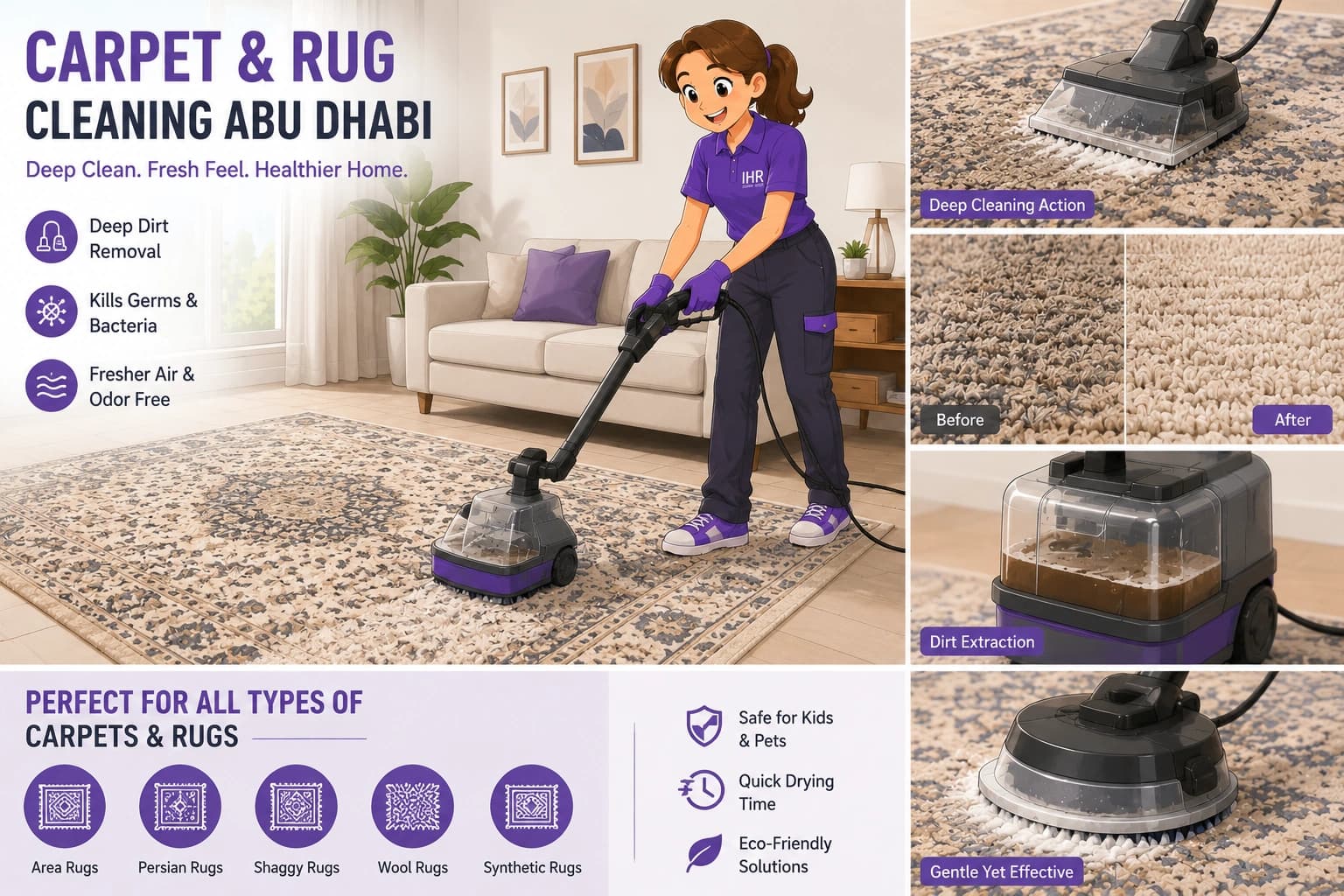
When a company says it steam cleans carpets, it almost always means hot-water extraction. Hot water with a little cleaning solution is sprayed into the pile under pressure and vacuumed out again in the same pass. The water is hot, but it is water. The name comes from the vapour that rises off it.
True steam is different. A steam cleaner boils water and delivers vapour with very little liquid. It is used on curtains while they hang and on hard surfaces. On upholstery its use is narrow, because vapour does not flush dirt out of a fabric: something still has to wipe or vacuum the loosened soil away. Heat also sets some stains and can mark heat-sensitive fabrics. On a sofa or a carpet, steam is a freshening tool and not a wash.
Dry cleaning, which covers three different things
Nothing done to a sofa or a carpet at home is dry in the way a suit is dry cleaned at a laundry. The word is used for three low-moisture approaches.
- Dry compound. A slightly damp absorbent powder is brushed into a carpet, left to take up soil and vacuumed out. The carpet can be walked on almost at once. It suits maintenance and fibres that must not be wetted, and it does less for heavy, greasy soil.
- Encapsulation. A low-moisture detergent is brushed into the carpet and dries into brittle crystals around the soil, which are then vacuumed away. It is common on office carpet tiles because the floor is back in use quickly.
- Solvent cleaning. Upholstery marked with the care code S is cleaned with a water-free solvent and not with water. It needs good ventilation and trained hands, and it is not a job for household products.
Extraction: the word to listen for
Whatever goes into a fabric has to come out again, with the dirt. Extraction is the step that does it: a wet vacuum with enough suction to pull the solution back out of the pile or the upholstery. The difference between a good clean and a poor one is usually not the detergent. It is how thoroughly the fabric was rinsed and extracted, and how many extra dry passes were made afterwards. When you compare companies, ask about extraction and drying before you ask about the product.
What decides the method: fibre, construction, dye and soil
A technician choosing a method is answering four questions, in this order.
What the fibre is
Synthetic fibres, meaning polyester, nylon, polypropylene and acrylic, absorb very little water. They do not shrink, they release soil easily and they dry fast. Most modern sofa fabrics and most fitted carpet are synthetic, and these are the materials that shampoo and hot-water extraction were designed for.
Plant fibres, meaning cotton, linen and viscose, behave the opposite way. They soak water up, swell and can shrink as they dry. They show water marks, and they can turn brown if they dry slowly. Viscose, which is also sold as rayon and, in rugs, as 'art silk', is the most fragile of all when wet: the pile distorts and may never lie the same way again.
Animal fibres, meaning wool and silk, sit in between. Wool cleans well but holds a lot of water, dislikes strongly alkaline detergents and high heat, and can felt if it is scrubbed hard. Silk water-marks, and its dyes can run. Leather is skin, not fabric, and is treated as such.
How the piece is built
The same cotton behaves differently as a fixed cover over foam and as a loose cover with a zip. A loose cover that is wet-cleaned on the cushion can shrink and no longer close. Velvet and chenille have a raised pile that crushes and marks if it is soaked or brushed the wrong way. A carpet with a jute backing can shrink or brown when the backing is soaked, where one with a synthetic backing will not.
What is underneath matters too. Deep foam and feather cushions hold water for a long time if the cover is over-wetted, and a fitted carpet sits on an underlay that dries far more slowly than the pile above it.
Whether the dye holds
Some dyes are not fast. Reds and dark blues beside white, hand-dyed rugs and printed cottons are the usual suspects. The test is simple and should always be done: a white cloth dampened with the cleaning solution is pressed onto a hidden spot. If colour comes off on the cloth, the method changes. On arrival, our technician checks the fabric construction and colour-fastness in an inconspicuous spot before starting.
What the dirt is
Dry soil, the dust and sand that make up most of what a fabric holds here, comes out with a vacuum. That is why every method starts with thorough dry vacuuming: wetting a dusty fabric before vacuuming it makes mud. Oily soil needs a detergent and some agitation. Spills are treated one by one before the general clean, with a product matched to the stain and the fabric.
A piece that is only dusty needs far less than one that is greasy. A careful technician uses no more water and no more chemistry than the soil calls for.
Which method for which sofa fabric
Use this table as a guide to the conversation, not as a rule. The care label and a test on the actual piece outrank any table.
| Sofa fabric | Usually suits | Avoid |
|---|---|---|
| Polyester and synthetic blends coded W or WS | Shampoo with extraction | Detergent left in; soaked cushions |
| Microfibre and faux suede | Whatever the code says; some are S only | Assuming water is safe |
| Sturdy cotton and cotton blends | Low-moisture shampoo, dried quickly | Soaking and slow drying, which leave water marks |
| Linen, viscose and silk blends | Low-moisture treatment only | Full extraction, heat and hard brushing |
| Velvet and chenille | Low moisture, pile brushed one way | Soaking and scrubbing, which flatten the pile |
| Loose covers | What the label allows, tested first | Wet cleaning that shrinks the cover |
| Leather and faux leather | Leather cleaner and conditioner | Fabric shampoo, steam, household sprays |
What the care label tells the technician
Many sofas carry a cleaning code on a label under the seat cushions: W for water-based cleaning, S for solvent only, WS for either and X for vacuuming only. A W or WS sofa is a candidate for shampoo. An S or X sofa is not, whatever the stain. The codes, and what they mean for anything you try yourself, are explained in cleaning a sofa at home: what is safe. Photograph the label and send it when you book.
How we clean sofas
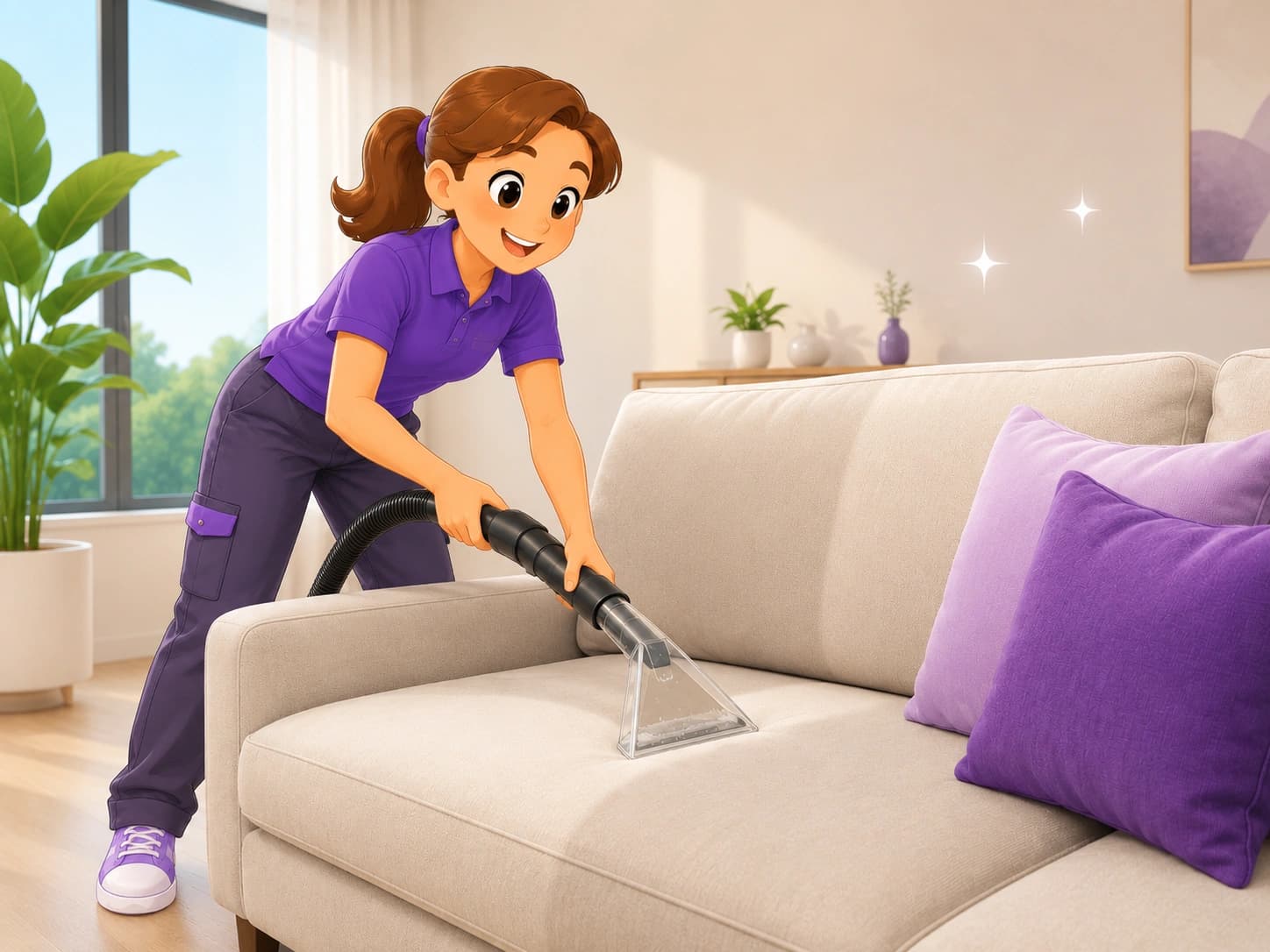
Our price list labels sofa cleaning as shampoo. The published process runs in this order: photos first, a fabric and colour-fastness check on arrival, dry vacuuming of the seams, crevices and the underside of the cushions, spot treatment, then a low-moisture shampoo or extraction where the fabric allows it, without over-wetting the cushion filling. Velvet and delicate weaves get a lower-moisture method and more careful testing. Leather is cleaned with leather products and conditioned, never shampooed. The full sequence is on the sofa cleaning page.
If your label says S or X, or the fabric is silk or viscose, say so before you book. We confirm from the photos what can safely be done, and it is better for both sides to learn that a piece is outside our methods before the visit than during it.
Which method for which carpet
Carpets are easier than sofas in one way, because there is no cushion filling to soak. They are harder in another, because the backing and whatever lies under it get wet too.
| Carpet or rug | Usually suits | Watch for |
|---|---|---|
| Synthetic fitted carpet | Hot-water extraction, or shampoo with extraction | Slow drying if the underlay is soaked |
| Wool carpet and machine-made wool rugs | Wool-safe detergent, cooler water and less of it | Strong alkaline products, heat, hard scrubbing |
| Office carpet tiles | Low-moisture methods are common in the trade | Water getting under the tiles |
| Viscose or 'art silk' rugs | Specialist handling, minimal moisture | Any ordinary wet clean |
| Handmade, Persian and silk rugs | A specialist wash, confirmed first | Machines and methods meant for fitted carpet |
| Jute, sisal and seagrass | Dry methods only | Water, which stains and shrinks them |
Fitted and synthetic carpet
This is the job hot-water extraction does well. The order of work matters more than the machine. The carpet is vacuumed first to take out grit. Walkways and spots are pre-treated and given a few minutes to work. Then the carpet is cleaned and extracted, with extra passes to pull water out, and the pile is brushed in one direction so that it dries evenly.
Our carpet service follows that pattern: dust removal, spot and stain treatment, then a shampoo or hot-water extraction method suited to the fibre, followed by deodorising. It is described on the carpet cleaning page.
Wool, handmade and silk rugs
A machine-made wool rug can be wet-cleaned with adjustments: a detergent made for wool, cooler water, less of it and fast drying. Tell us the fibre when you book, because wool gets a gentler method than synthetic carpet.
Handmade, Persian, antique and silk rugs are a different matter. Their dyes, foundations and fringes do not suit a machine built for fitted carpet, and some are better sent to a specialist workshop than cleaned on a living-room floor. Do not assume a standard carpet clean covers them. Describe the rug, send photos of the front and the back, and have the scope confirmed first. What to ask is in Persian and handmade rugs: what to ask first.
Mattresses and curtains in brief
A mattress is the clearest case for low moisture. It is a thick block of padding, foam or springs that cannot be rinsed through and extracted the way a carpet can, and it dries slowly from the inside. Mattress cleaning therefore relies on deep vacuuming, spot treatment and a light, fabric-safe clean of the surface, and memory foam gets the least moisture of all. Anything that soaks a mattress is the wrong method. What you can do yourself is in mattress cleaning at home.
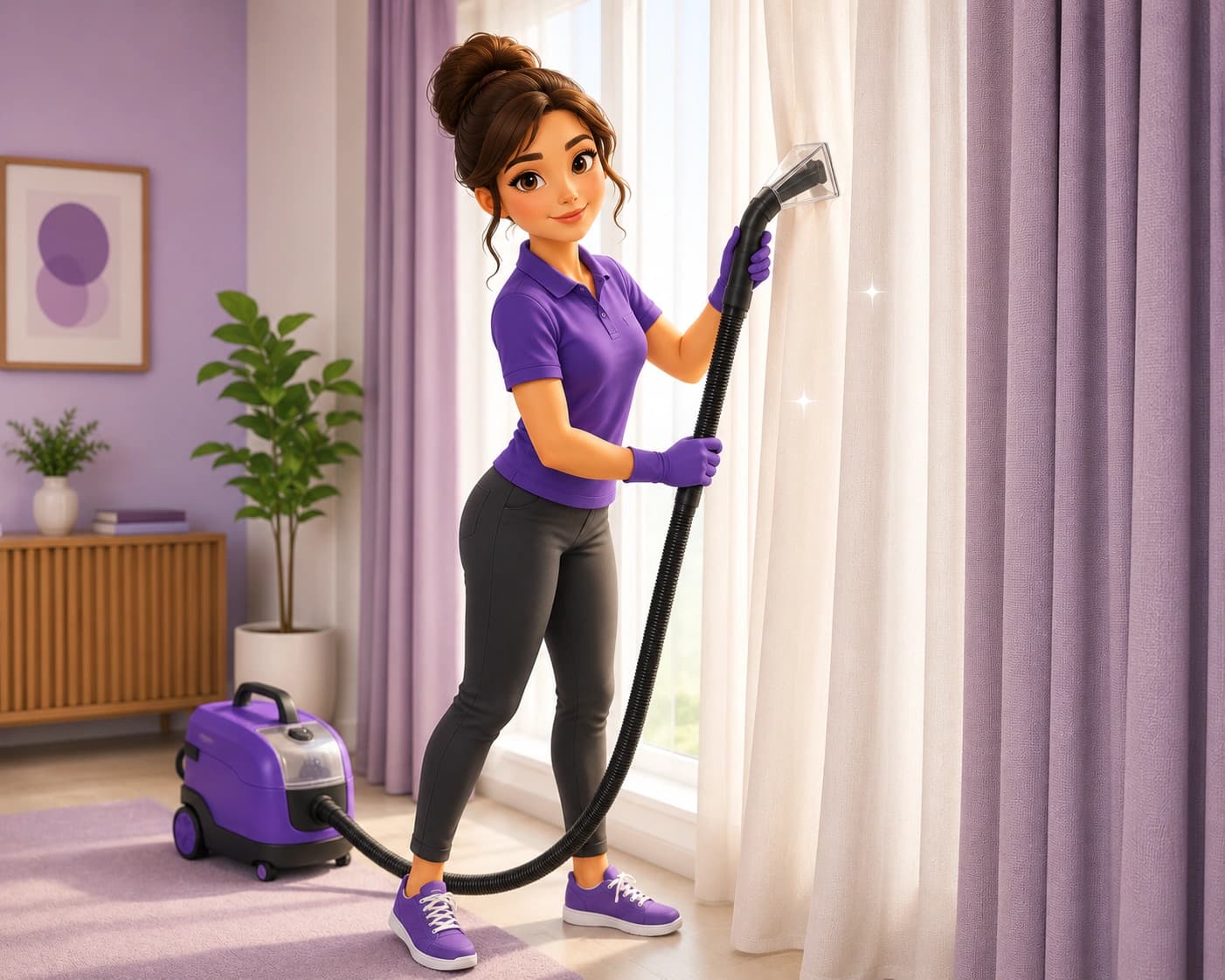
Curtains are where true steam belongs. They can be cleaned while they hang, the vapour relaxes creases as it freshens the fabric, and there is no take-down, laundry and re-hanging. Which curtains suit steam on the rail and which need a wash off it is a subject of its own, and it has its own guide: on-site steam or take-down washing for sheer, lined and blackout curtains.
Drying: half of the method
Most of what goes wrong with fabric cleaning goes wrong while the fabric dries. Three faults come from too much water or too little moving air.
- Wicking. A stain that seemed to have gone comes back as the fabric dries, because residue deeper down is drawn up to the surface with the evaporating water. A follow-up spot treatment usually deals with it.
- Browning and water marks. Plant fibres and some backings release a brown tint if they stay wet for long. Fast drying prevents it.
- A musty smell. Foam, underlay or cushion filling that stays damp for days begins to smell, which is worse than the dirt that was removed.
Drying in an Abu Dhabi home
The AC is the most useful drying tool in the home. Air-conditioned air is cool, dry and moving, which is what wet fabric needs. Keep it running, add a fan if you have one, and stand loose cushions on edge. In the cooler months an open window helps as well. In the humid months and on dusty days keep the windows shut: humid air slows drying, and damp fibres pick up dust quickly.
Most sofa fabrics need two to six hours of airflow before the cushions are used. Carpets take from several hours to a day, depending on the method and the ventilation. Low-moisture and dry methods are quicker, which is part of their appeal, though they do less for deep, greasy soil. The technician tells you the expected time for your fabric and your room before leaving.
Two habits protect the result. Keep feet, children and pets off the fabric until it is dry, because damp pile flattens and re-soils easily. And wait for the technician's word before moving furniture back onto a cleaned carpet, since wooden and metal feet can leave marks on damp pile.
'Deep steam cleaning' and other advertising words
Deep steam cleaning is an advertising phrase, not a method. It may mean hot-water extraction, a steam machine or a shampoo, and you cannot tell which from the words. Be careful, too, with promises that go beyond cleaning. Heat helps to loosen oily soil. What a fabric clean does is remove soil, dust and odour from the fabric, and we make no health claim for any method.
These questions get past the wording. A company that knows its work answers all six without difficulty.
- What is my fabric, and which method will you use on it?
- Do you test for colour-fastness on a hidden spot first?
- How wet will it get, and how is the water taken out again?
- How long until it is dry in an air-conditioned room?
- What will you do if a mark does not lift, or comes back as it dries?
- Is there a fabric you will not clean, or would send to a specialist?
The answer to be wary of
A company that cleans everything the same way has not answered the first question. Nor has one that promises to remove every stain before seeing the piece. What is realistic for old marks, and what to tell a technician about them, is covered in our earlier article on what to know before booking sofa and carpet cleaning.
Home machines and shop products: where they fit
Three kinds of product are sold for doing this yourself. Each has a place, and each has a limit.
- Home carpet washers work on the hot-water extraction principle with a smaller pump and a weaker vacuum. On synthetic carpet they are fine for a freshen-up if you go slowly, use less detergent than you think you need and make extra passes without spraying, to pull water out. They leave more water behind than a professional machine, so drying matters even more. Keep them off wool, viscose and handmade rugs.
- Dry carpet cleaning powders are the household version of dry compound: brushed in, left for a while and vacuumed out. They are low in risk and useful between washes for a carpet that must stay dry. Vacuum very thoroughly afterwards, because powder left in the pile is its own kind of dirt.
- Upholstery shampoos and foams are made for fabrics coded W or WS. Used sparingly on a small area and blotted out, they can deal with a fresh mark. Used over a whole sofa with no machine to extract them, they leave detergent in the fabric.
Two rules for any product
Test it on a hidden spot and let the spot dry before you judge it. And never mix products or put one on top of another without rinsing. Bleach mixed with an acid or with ammonia gives off dangerous fumes, and milder combinations can still set a stain or strip the colour around it.
What to do week by week, including where powders and sprays fit, is in keeping a carpet clean between professional washes.
What to tell us when you book
The method is confirmed from photos before the visit, so what you send decides how well it is chosen.
- Photograph the care label, if there is one. On a sofa it is usually under a seat cushion. On a rug it is on the back.
- Photograph the whole piece, then a close-up of the fabric or the pile, and the back of any rug.
- Photograph each mark. Say what caused it if you know, how old it is and what has already been used on it.
- Mention anything unusual: loose covers, feather cushions, a velvet or silk fabric, a handmade rug, a pet accident that went through to the filling.
- Give the seat count and the carpet's measurements, so the time and the equipment are planned for.
Price and confirmation
We then confirm the method and the final price before anyone travels. Sofas are AED 30 per seat and carpets AED 10 per square metre, with a minimum order of AED 100 per visit. How those are counted, with worked sums, is in the fabric care price list explained. Payment is online by card, from My bookings on this website, once the price is confirmed.
Common questions about cleaning methods
Is steam cleaning better than shampoo?
Neither is better in general. Hot-water extraction rinses more thoroughly, so it leaves less behind in a carpet. Shampoo brings more agitation, so it shifts more greasy soil from upholstery and walkways. Good practice often uses both, shampoo to loosen and extraction to rinse. On a delicate fabric the better method is whichever uses less water.
Can a sofa be dry cleaned at home?
Not in the laundry sense. A sofa coded S can be cleaned with solvent by a professional equipped for it, with the room well ventilated. A sofa coded X can only be vacuumed and brushed. Removable covers with a dry-clean label can go to a dry cleaner, all of them together so that the colour stays even. We have not published a solvent service, so ask before booking if your label says S.
Will shampooing shrink my covers or my carpet?
Synthetic fabrics and synthetic carpet do not shrink from a normal wet clean. Cotton and linen covers, viscose and jute-backed carpets can, and the risk rises with the amount of water and the time the piece stays wet. That is the reason those materials get a low-moisture method, or a different service altogether.
How wet should a sofa be after cleaning?
Damp to the touch on the surface, not wet inside. If water can be pressed out of a seat cushion by hand, too much went in and too little came out. The same goes for a carpet that squelches underfoot. Damp fabric with the AC running dries in hours. Soaked filling takes days and may smell before it is dry.
Which method works on pet accidents?
The method matters less than the depth. Urine passes through the fabric into the cushion or the underlay, so a surface clean removes the mark and leaves the smell. Treatment has to reach where the liquid went and has to break the odour down, not cover it. Fresh accidents respond far better than old ones. The detail is in pets at home: hair, odour and accidents on sofas and carpets.
Does the method change how often cleaning is needed?
Not much. Use sets the interval, which for most homes is six to twelve months. A clean that leaves detergent behind does shorten it, because residue attracts dirt, and that is one more reason to ask about rinsing. The intervals for each item are in how often sofas, carpets, mattresses and curtains should be cleaned.
Choosing the method is our job; describing the fabric is yours
You do not need to decide between shampoo, steam and dry cleaning before you book. You need to say what the piece is made of, show its label and its marks, and expect a clear answer about what will be used on it and how long it will take to dry.
The four services and what each visit includes are on our fabric care page. When you are ready, book online and send the photos. The method and the final price are confirmed to you before the visit.